|
Miscellaneous |
|
|
|
|
|
|
|
|
 |
|
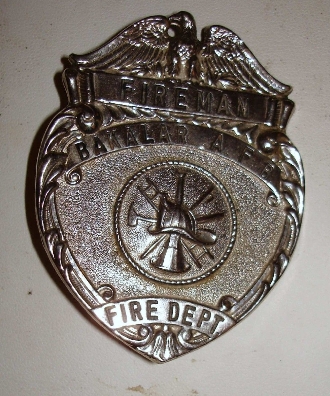
Badge from the Bakalar Air Force Fire Department. |
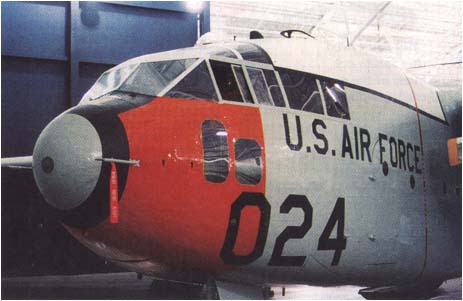
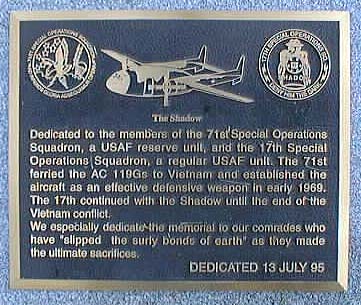
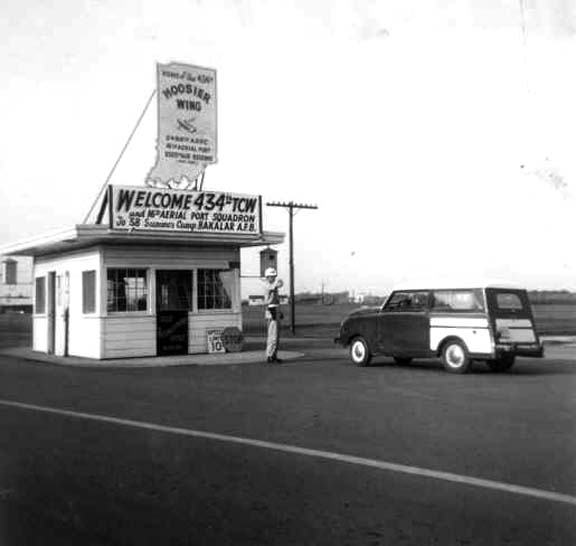
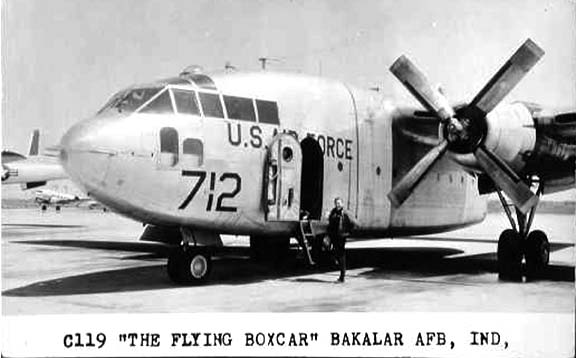
My Flying Days -- Allen H. CumminsC119 Flying Boxcar July 2006 Late in the spring semester of my senior year at Purdue, I joined the 434th Air Force Reserve Troop Carrier Wing located at Bakalar AFB in Columbus, IN. In August 1958, I entered basic training at Lackland AFB in good old San Antonio, Texas. We all survived and a bunch of us Airmen went on to Sheppard AFB in Wichita, TX for air freight school. After graduation, we spent 3 months at Scott AFB near St. Louis in visibility control. That means when an airplane landed, we'd clean the windshield and the inside of the plane. After active duty, we all went back to Bakalar AFB at Columbus, IN for 5½ years in the reserves. I was in the 16th aerial port squadron, and everyone in the squadron was a loadmaster. It was here that I learned to load C-119 flying boxcars and how to drop heavy equipment out the back of the 119s to the army below. Once a month, we'd meet on Friday night, and all day Saturday and Sunday. We had to get a certain amount of flying time in to get our flight pay, so we'd usually fly with the crew for 2 to 6 hours each weekend. We learned weight and balance, and sometimes we'd make practice drops. Each summer we'd spend two weeks in training. This usually took place in South Carolina and we'd do a lot of close formation flying. If a reserve unit didn't have loadmasters, such as the O'Hare reserves, that unit would drop the army paratroopers and we'd come right behind and drop the supplies, jeeps and anything else the Army had asked for. We'd attach roller conveyors to the floor of the plane. The load was on a steel pallet and rolled into the plane, and we'd chain it down with quick release hooks. We'd take off in groups of nine planes, get into formation and fly to the drop zone. Each plane had 2 loadmasters. Five minutes before drop, the other loadmaster and I would take off the back chains. Two minutes before drop, we'd make the final hookup with the extraction parachute. At one minute we'd take off the rest of the chains and we then had a live load. The pilot was notified via intercom. When we got to the drop zone, the navigator would tell the pilot to drop. He had a handle near his left knee which he pulled. This popped the extraction chute at the back end of the plane. The chute would open, and it was attached to the load. The load would shoot out the plane at almost bullet speed. Once the load was out, three big chutes would open, and at this point you hoped the load hit the zone. We got activated for the Cuban crisis in October 1962. Our wing moved half of its 119s to Tampa with the rest on standby at Columbus. If Castro hadn't removed the missiles, we were going to make 3 round trips a day, dropping equipment to the army that was scheduled to paratroop into Cuba. We dropped at an altitude of 1,200 feet. We might have made one or two trips before the Cubans would have shot us down like ducks flying over a pond. I got out in August 1963 with the rank of Staff Sergeant. Our C-119s went to Vietnam a few years later and were converted and used as gunner planes. I didn't do anymore flying until 1969. I was living east of Brooksville, MS and was the resident manager of the Deerbrook Farms. I bought a Cessna 175. It didn't have much radio navigation equipment and it didn't make any difference because I was never trained for radio. I learned enough radio to get by, but I was certainly a long way from being instrument rated. Every time we'd fly cross country, it seemed like we'd get into some kind of weather problems. Looking back, it's a wonder I didn't crash and kill everybody with me. I sold old November7073Mike in 1972. I didn't fly again until the early 1980s. I checked out in this Cessna with all the radios, variable speed prop, etc. I flew on and off for a couple of years, but I knew the planes were getting out of my ability and it was becoming very costly to rent one like this. I gave it up for good in 1984. |
|
|